

Five conversations on building better money habits.
Financial health as a growth engine for banks and fintechs.
Season One of Hacking Money Habits brings together researchers, operators, and product leaders exploring how behavioral science, AI, gamification, and inclusive design can help people build better financial habits. Supported by Flourish Fi, a Telos Labs company, and the Mastercard Center for Inclusive Growth.
If you lead product at a bank or fintech, you already know the problem. Most financial products optimize for the wrong thing. They count sign-ups, deposits, and daily actives. Those numbers look good in a board deck and tell you very little about whether the people using the product are getting healthier with their money.
Hacking Money Habits is a long-form interview show that asks the opposite question. We bring on behavioral scientists, product leaders, AI founders, and inclusion researchers to discuss one thing: how to build a financial product that changes how someone relates to money.
Hacking Money Habits was created to explore what it takes to design financial products that actually improve people's financial lives. Season One was supported by Flourish Fi, a Telos Labs company, and the Mastercard Center for Inclusive Growth, and now lives inside The Grove as part of Telos Labs' broader work at the intersection of financial health, behavior change, AI, and product design.
Season One opens with the behavioral science foundations of product design, moves through gamification and AI, sits with the emotion behind financial decisions, and closes on how financial institutions can measure inclusion in a way that holds up under scrutiny.
Your hosts: Pedro Moura and Yasmin Graeml.
Pedro and Yasmin bring on top behavioral scientists, banking executives, fintech founders, and social impact innovators to share what they have learned about building responsible financial products. The show covers behavioral science, financial health, data intelligence, and personalization. Most of all, it sits with the real challenge of balancing social impact and financial sustainability.
The episodes.
Welcome to Hacking Money Habits.
Hosted by Pedro Felipe Moura and Yasmin Graeml
Pedro and Yasmin introduce the show: what it covers, who they wanted to bring on, and why behavioral science, product, and inclusion belong in the same conversation. A short orientation for the season.
Listen in the full-season player above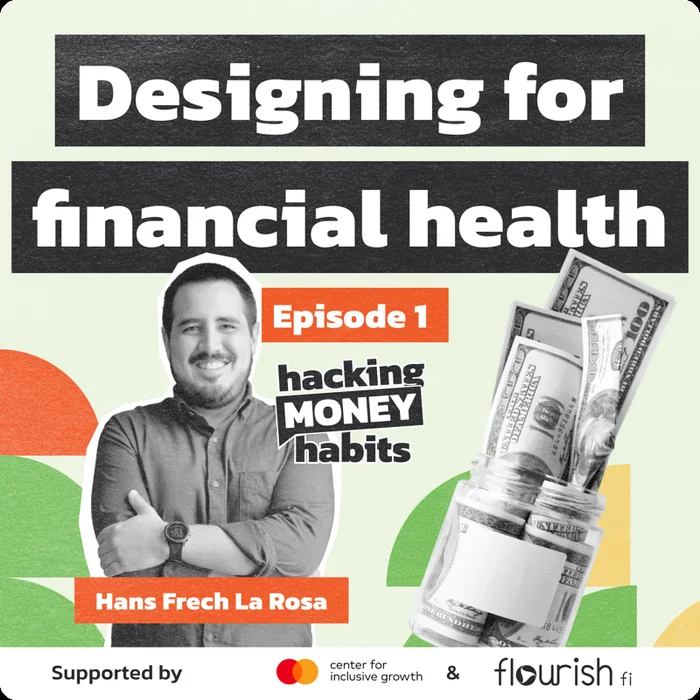
Designing for financial health.
With Hans Frech La Rosa, Duke University, Center for Advanced Hindsight.
Hans opens the season with a conversation on behavioral science and financial well-being. He translates the Center for Advanced Hindsight's research into product language: which interventions consistently change saving behavior, which ones work in a lab but break in the field, and how to design products that succeed by the user's definition rather than the dashboard's.
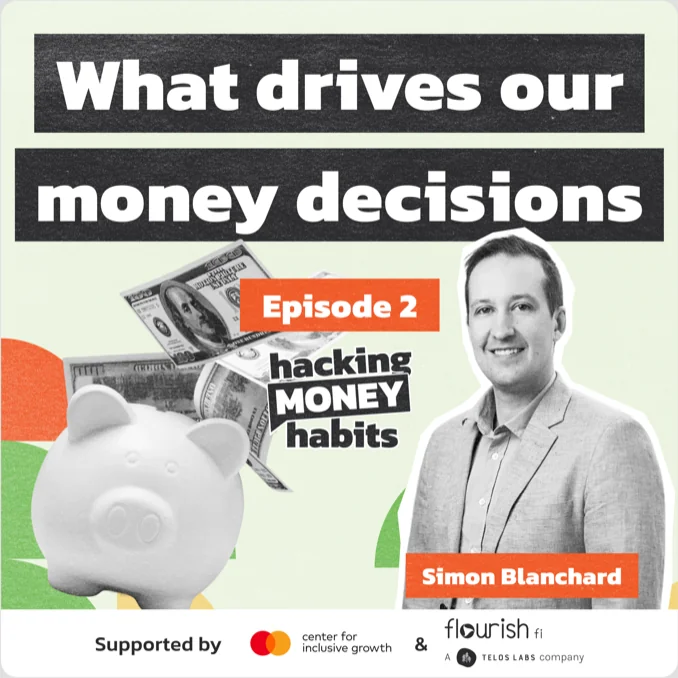
What drives our money decisions.
With Simon Blanchard, researcher on consumer decision-making.
Gamification is used so broadly that it has lost most of its meaning. Simon discusses what game elements do to financial decision-making, where personalization shifts from useful to manipulative, and how product teams can use these tools without crossing into extractive territory.
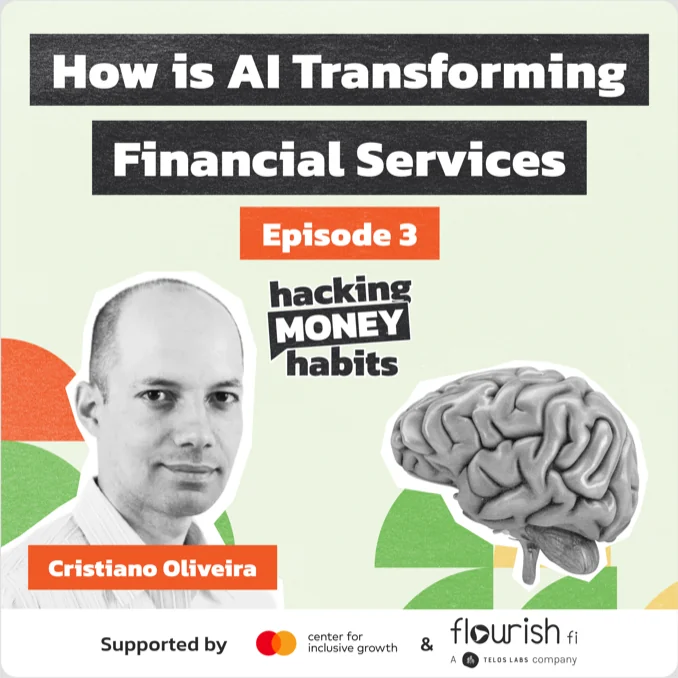
How AI is transforming financial services.
With Cristiano Oliveira, co-founder of Olivia AI (acquired by Nubank).
Cristiano built one of the first AI-native personal finance products and took it through acquisition by Nubank. He has a clear view of where AI helps a money product and where it does not. We cover what AI does well in financial services today, what it does poorly, and how founders can build durable products in a category where the underlying models change every six months.
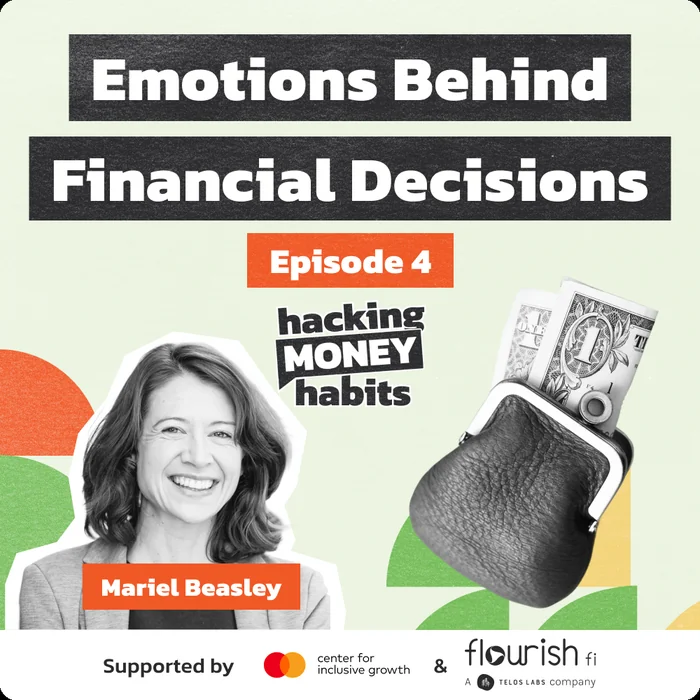
Emotions behind financial decisions.
With Mariel Beasley, Head of Product & Insights, SaverLife.
Mariel co-founded and led the Common Cents Lab at Duke before moving into product leadership at SaverLife, a Telos Labs client serving working Americans. The episode covers the move from research to product: how a behavioral finding becomes a feature without losing rigor, what underserved members tell SaverLife about saving and stress, and how to measure financial health well enough to make product decisions from it.

What financial health really means.
With Luz Gomez, VP & Head of Research and Insights, Mastercard Center for Inclusive Growth.
Luz runs the Mastercard Center for Inclusive Growth's global research agenda, working across sectors and geographies to produce evidence that shapes policy, practice, and partnerships. We discuss the difference between inclusion and financial health, why resiliency belongs in the metric set, what cross-functional work looks like when financial institutions take this seriously, and how to measure financial health in a way operators can defend.
What ties the season together.
Across the five conversations, one pattern repeats. The products that change behavior come from teams who refuse to flatten financial life into a transaction history. Behavioral science, AI, gamification, and inclusion research are different vocabularies for the same idea: the person using the product has stress, goals, and a history with money. The product can respect that or it can ignore it.
Behavior, data, and product strategy, applied to financial software.
Through Flourish Fi, Telos Labs continues this work at the intersection of financial health, behavioral product design, AI, and inclusive financial software. Hacking Money Habits is one expression of that work: a conversation series on what it takes to build products that earn trust, hold attention, and help people build better financial habits over time.
From conversation to craft.
Telos Labs partners with fintech teams to design products people trust, automate the work that slows them down, and decide what's worth building.
Strategic Assessment
A 3-week sprint to decide: build, buy, or kill.
Learn more → INDUSTRYFintech Product Development
Design, build, and scale regulated products across payments, lending, and risk.
Learn more → AUTOMATIONAI Workflows
Custom automation for ops, support, and reporting.
Learn more →Or see the case study of Flourish Fi: how we engineered Flourish Fi's engagement engine →
Stay with the conversation and build the future.
Listen to Hacking Money Habits on Spotify, then discover how Telos Labs helps fintech and banking teams design, build and scale regulated products across payments, lending, loyalty, fraud and risk.