

Design
Paralysis by Analysis: When Research Starts Holding Your Product Back

We talk a lot about the value of qualitative and quantitative user and product research in UX, and rightly so. Good research helps us make informed decisions, design the right things, and advocate for users with confidence, ultimately leading to more enjoyable experiences.
But sometimes, we just can’t seem to stop. We keep collecting inspiration, ideas, best and worst practices, trends, and feedback, a vast pile of information that leaves us overwhelmed and stuck in a “what do I make of all this?” moment.
We’ve all been there: you dive deep into discovery and benchmarking, conduct interviews, map user journeys, build wireframes, and case down edge cases… until suddenly, you realize you’re not actually moving forward anymore.
In the pursuit of clarity, you’ve landed in confusion thanks to information overload.
That’s paralysis by analysis , and it happens more often than we like to admit.
Under the hood, it’s often driven by fear: fear of being wrong, of wasting engineering time, or of putting something imperfect in front of users. So we tell ourselves we’re being “thorough” when we’re really avoiding a decision.
The Trap We Don’t See Coming
For every new product, feature, or ambiguous problem we face as designers, or in any other role, it’s tempting to conduct thorough research to validate hypotheses and get a full picture of the path ahead. It’s a reasonable instinct and a core part of good product design.
But more often than not, more research turns into a reason to delay decisions. You identify multiple ways to solve a problem, several options you actually like, valuable insights, and hopefully,many pitfalls to avoid. So, we try to filter all this information using our go-to methods: card sorting, heat maps, charts, etc., hoping to land on a great solution.
And yet, we find ourselves stuck, paralyzed in a Figma file, overloaded with ideas, and unsure what to do next or how everything connects.
How Much Is Too Much Information?
There’s no magic number, but here are a few signs you might be slipping into over-analysis:
- You’ve already validated the core assumptions, but you’re still hesitant to proceed
- You’re repeating research to confirm what you already know from experience, familiarity, or even instinct.
- You feel the urge to get just a little more data
- Conversations about validation keep circling, and no one can agree on a clear starting point.
- You end up creating options A, B, C, and D, and instead of narrowing down the problem, you create more discussion points for the next round of reviews.
Sound familiar? Probably because this isn’t just a product design problem. It’s a challenge that shows up everywhere, from project managers and developers to investors, researchers, and even your friend who can’t decide which car to buy.
What Helps Break the Cycle
At Telos , we deeply value the power of good research, but when we start to sense the overwhelm creeping in, we ground ourselves with a few key questions:
- What are we trying to solve? Is it beneficial to the business, the users, or both?
- What risk are we trying to eliminate? Is it critical?
- Is this a decision that’s hard or expensive to reverse later – for example, something with compliance, security, or core data models?
- Have we learned enough to make a confident wireframe or user flow?
- Is now an appropriate time to conduct an A/B test to validate the new hypothesis against the existing one?
- Can we afford to test with users, share interactive Figma demos, or use AI to validate a couple of ideas, rather than invest in development time?
Quick caveat: there are moments when another round of research is the right move, especially in regulated spaces like finance or healthcare, or when a bad decision would be very hard to undo. In those cases, the goal isn’t to move fast at all costs; it’s to be explicit about what question the next research round must answer.
Sometimes, the most helpful thing is simply to start building. Even a rough prototype, shown to stakeholders or users, can teach you more than another round of analysis ever could.
We’ve seen teams break deadlocks by scoping a single “happy path” flow, prototyping it, and putting it in front of a handful of users. In a week, they learn more than in the previous month of debate.
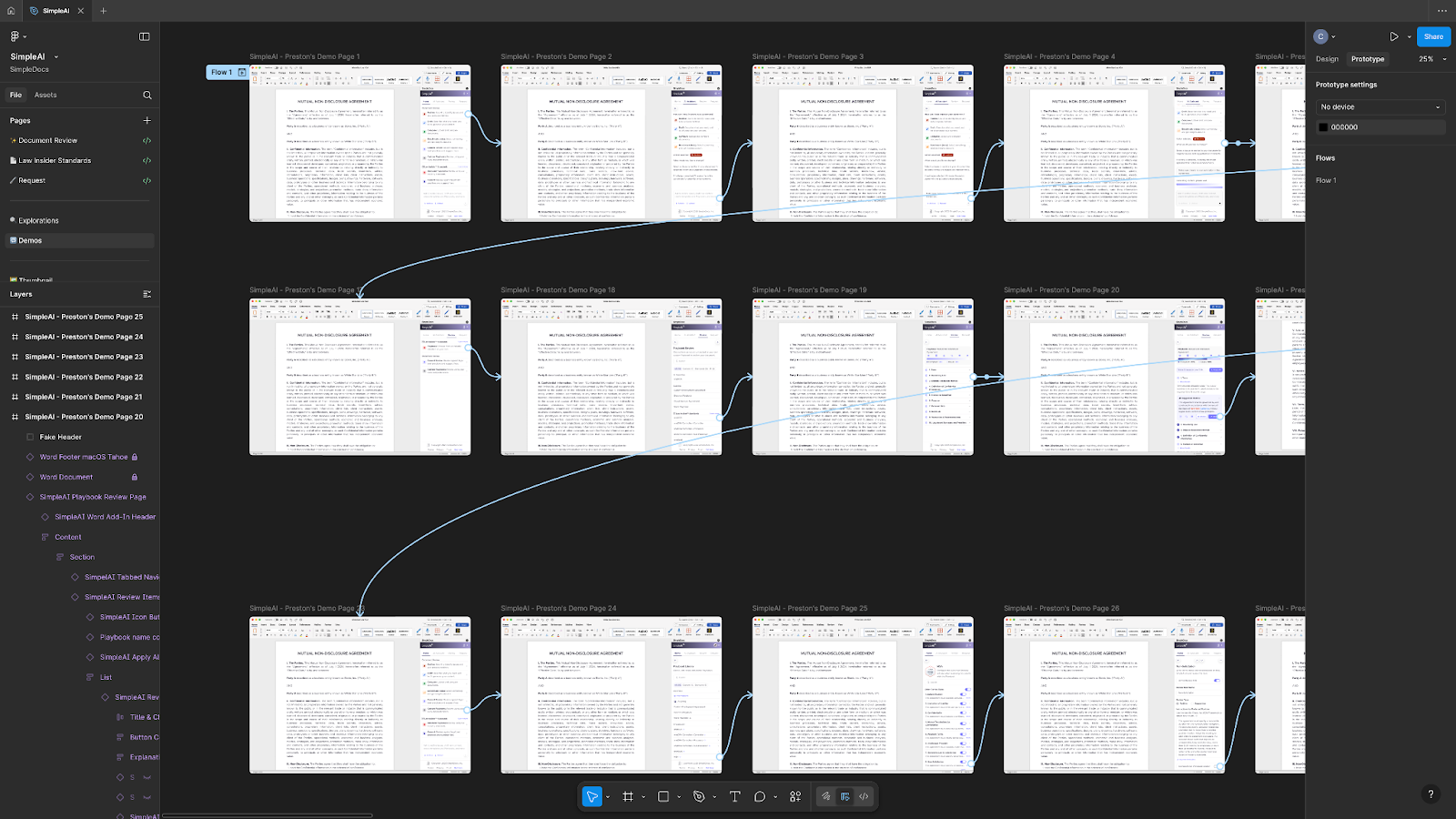
At Telos, we use thorough interactive Figma prototypes to validate hypotheses and ideas quickly, get user and stakeholder feedback, and iterate at a rapid pace.
Research is Valuable, But So is Progress
Research isn’t the enemy here. Endless delay is. Thoughtful research is essential; getting stuck in an endless loop of “just one more insight” is what slows teams down.
It’s easy to tell yourself you need a bit more clarity before you can move ahead. But some of the best insights come from doing: putting a prototype in front of a user, shipping a small slice of the flow, or testing a rough draft with your team. At some point, the best way to learn is simply to start building.
If you’re building AI-enabled products in complex domains, the challenge isn’t choosing between research or action, it’s doing just enough focused research to ship the next right thing.
More posts in Design
The Design Process Was Built for a World That No Longer Exists.
What happens to design when execution is no longer the bottleneck.

Apr 6, 2026

UI Design vs Performance: Speed Without Sacrifice
Designing beautiful interfaces means nothing if performance suffers; speed and clarity must be built in early.

Dec 16, 2025
Thinking About University? Product Design Deserves a Spot on Your List
Discover why Product Design deserves a place on your university list—blend creativity, tech, and business into a career shaping impactful products.

Aug 28, 2025

Let's talk about your vision.
Not sure if your idea is ready? Run our MVP Diagnostic, powered by AI.