

AI features you can test, ship, and improve.
For CTOs and product leaders, the challenge is getting AI to do useful work with real users and real constraints. We help you choose the task, build the feature, and establish the evidence for releasing it.
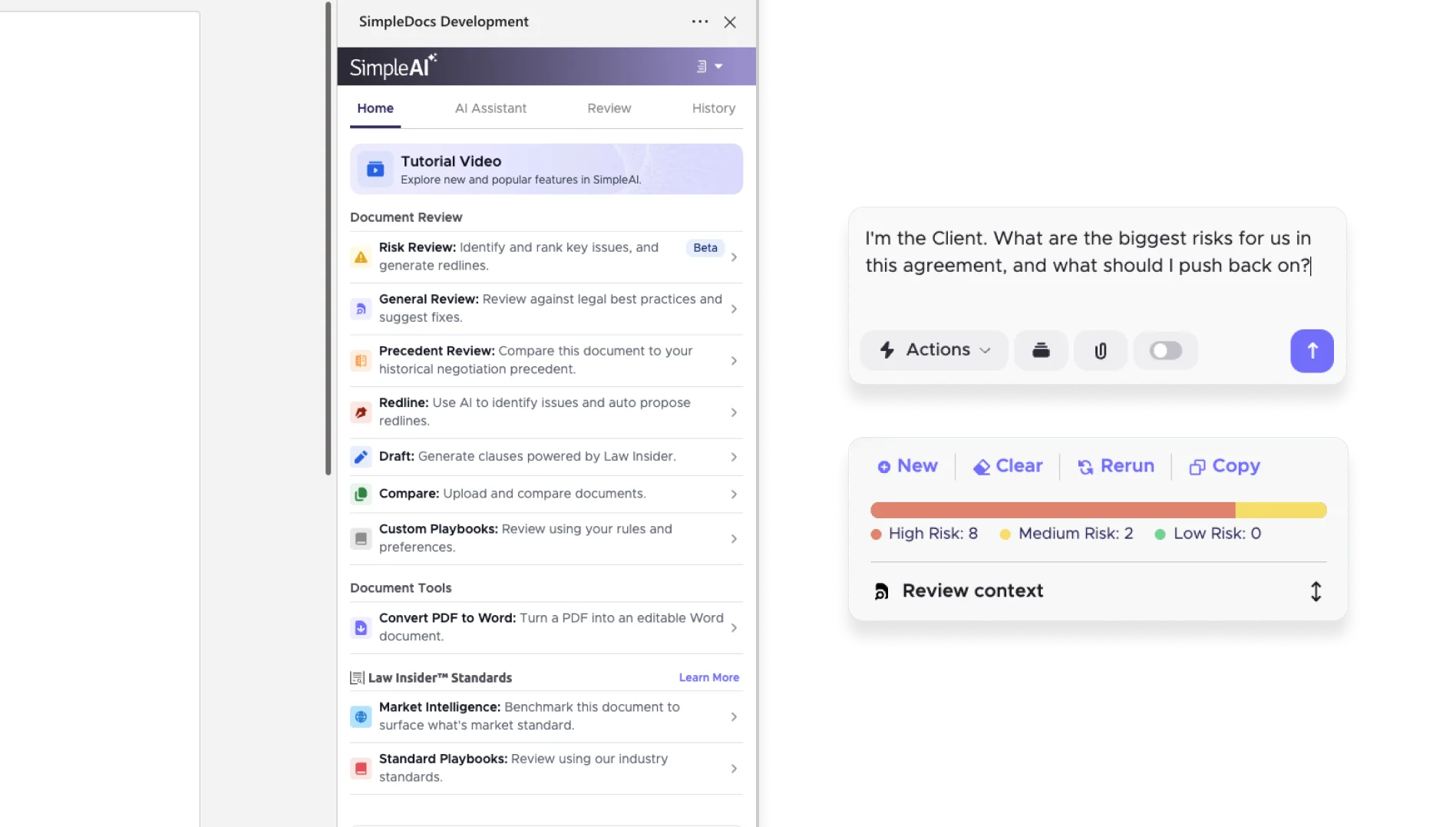
Define what a useful answer has to do
An impressive demo is a starting point. We work with you to identify one valuable task, the information it needs, and what happens when the model gets it wrong. That gives the prototype a concrete standard to meet.
The user task
Review an agreement, extract information, or answer a question using the right context. Define where the feature fits in the product and what the user does with its output.
The acceptance criteria
Choose representative inputs and expected behavior, including ambiguous and failure cases. Evaluate changes against the same tasks so comparisons have meaning.
The operating boundaries
Agree on data access, permitted model and provider use, and which actions need human approval. Specify failure behavior and an escalation path before rollout.
For example: extract a renewal date
A document feature should find the right date, show supporting text, and flag missing or conflicting information for review. If it updates a record, check the saved value and permissions too. A plausible answer alone doesn't establish that the task succeeded.
This is an illustrative test, not a client result. Anthropic's engineering guidance distinguishes an agent's reported success from the actual outcome and recommends repeatable evaluations with explicit success criteria. Read the evaluation guidance.

Make model changes reviewable
For SimpleDocs, we helped build prompt versioning, structured evaluations, model comparisons, and publication checks. The team can inspect a candidate against explicit product tasks before deciding how to use it. Provider configuration and adapters support changes to the underlying model infrastructure.

What you receive
A working feature and evidence for the next decision
We agree on the task, scope, and release criteria with you. The deliverables connect the feature to its evaluation and rollout plan, so your team can assess later changes too.
- An AI feature integrated into the agreed product workflow, with data access and human approval boundaries defined.
- Representative evaluation cases, expected behavior, and versioned prompts. Repeated trials help expose inconsistent results; established cases become regression checks.
- A comparison of quality, response time, and operating cost for the candidate models on the same task, with an agreed usage budget.
- Known limitations and failure cases, including what the user sees when the feature cannot complete the task reliably.
- A rollout and monitoring plan with release criteria, fallback behavior, and an owner for reviewing failures after launch.
AI inside products people use
Explore the broader product context behind the engineering.

SimpleDocs
From NDA automation to an AI contracting platform
A continuing partnership across contract workflows, AI review, integrations, and enterprise capabilities.
View case study
Jericho Security
AI-powered cybersecurity training
See the product and engineering work behind a platform for security awareness and phishing simulations.
View case studyChoose the right starting point
The product direction is unclear
Compare the credible options, dependencies, and first phase before committing to a build.
The work is inside your operations
Connect an operational workflow to the tools your team already uses.
You want to understand delivery
See how coding agents, review, workflow verification, and senior ownership fit together.

Which product task should AI help with?
Tell us about the users, the workflow, and what a useful result would look like. We'll discuss what to test first.